Via Screenrant.com
By Keith Walther | Rose Law Group Reporter
Ever wonder what a fever dream on acid looks like? Well, this is it. “Hurry Up Tomorrow” is a psychological thriller featuring the pop music star The Weeknd who happens to be playing himself…what a stretch. This movie, while visually stunning and well-acted, is a chaotic jumble of scenes with no cohesive storyline, dabbling purely in imagery and symbolism that is impossible to understand.
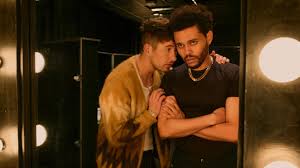
Abel Tesfaye (The Weeknd) is a world-renowned musician currently on tour performing at sold out stadiums. Suffering from sleep deprivation and a broken relationship, he turns to his friend and manager Lee (Barry Keoghan) to help him get through these performances. Lee is the typical bad manager, uncaring for Abel’s wellbeing and encouraging copious amounts of booze and drugs to get him on the stage each night.
Anima (Jenna Ortega) is a pyromaniac obsessed with Abel’s music. When the two cross paths for a chance encounter, a tumultuous 24 hours ensue that threaten to ruin everything. Forced to look inward, Abel must confront his emotions and demons to find his inner peace.
There is a reason this film sat on the shelf after being made for two years before Lionsgate finally came around with a distribution offer. Directed and co-written by Trey Edward Shults (“Waves”), “Hurry Up Tomorrow” plays like an overly long music video with a whole lot of style and very little substance. The scenes are discombobulated and out of sync with no real narrative to speak of, alternating between the two main characters without much context. The result is incoherent surrealism that prohibits audiences from connecting to the story in any meaningful way.
Shults does incorporate some incredible cinematography, using beautifully fluid continuous shots as well as arc shots. The arc shots are a bit overused, however, leading to a sometimes-dizzying effect for viewers, especially when he speeds up the movement. There are several moments when he implements rapidly flashing lights and images that would put an epileptic into serious danger. The severe closeups he also implements, particularly of the main character’s eyeballs, are a bit much, enhancing every single capillary to a nauseating degree. While the symbolic imagery is creative, Shults overlooks the key concept when using imagery, having the imagery support the narrative rather than become the narrative.
Having The Weeknd, who has limited acting experience, portray himself is a smart, safe move that allows him to stay in his comfort zone of music. However, he does demonstrate an impressive ability to delve into his emotional and psychological range. The vulnerability he exhibits is disarming and allows the audience to better empathize with his character. Overall, though, it seems like The Weeknd’s goal was a self-serving one, showing his fans how deep and emotional his songs really are despite their uplifting beat.
Jenna Ortega has played her fair share of eccentric characters, so it should come as no surprise that she brings that same amount of mysterious intrigue and appealing intensity to this role. She expands her range to include mental illness, showing an obsessiveness that can quickly spiral out of control. Oscar nominee, Barry Keoghan, on the other hand was somewhat underwhelming as the stereotypical aggressive manager, only concerned with keeping the money machine rolling regardless of the cost. Offering little to no depth, his Irish dialect quickly loses its charm.
Ultimately, this is what spending too much time in the surreal looks like, a pointless display of drug infused visuals being passed off as intelligent and profound, making you feel like an idiot if you don’t understand it. If you walk out of the theater asking what the heck that was, it means they did a horrible job of storytelling. “Hurry Up Tomorrow” will have you rushing for the exit doors, so you’re better off avoiding this unnecessary movie altogether.
This movie earns