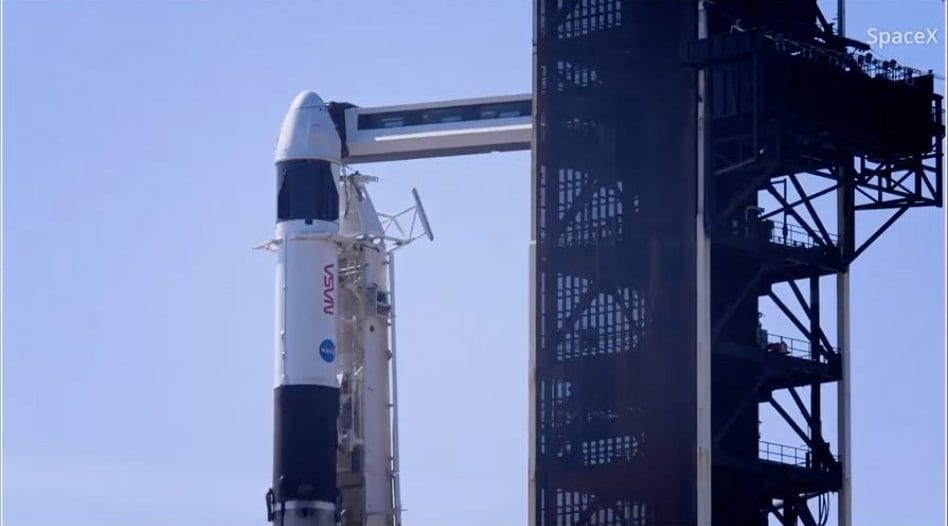
Photo screengrab via SpaceX livestream
“This is more than just a technical milestone. It’s part of the compliance process under applicable rules and regulations, ensuring the Falcon 9 meets safety requirements.”
–Shruti Gurudanti, partner and leader of Rose Law Group space law practice
By Will Robinson-Smith | Space Flight Now
The nine Merlin engines that power SpaceX’s Falcon 9 rocket roared to life for about 10 seconds on Tuesday afternoon at NASA’s Kennedy Space Center. With the hold down clamps at Launch Complex 39A keeping the rocket in place, the launch vehicle appeared to perform a good static fire test, pending review.
The mid-afternoon rocket engine firing was designed to verify the health of the Falcon 9 rocket that will carry four humans up to the International Space Station this week. The three astronauts and one cosmonaut of the mission, dubbed Crew-11, will carry out a long-duration stay onboard the orbiting outpost with liftoff planned for Thursday, July 31.
Tuesday’s test came after an indicator issue prevented the 70-meter-tall rocket from beginning the burn at 3:09 p.m. EDT (1909 UTC) on Monday. NASA issued a statement describing the issue on social media about 3.5 hours later and announced that teams would try again on Tuesday, July 29.
“Monday’s test auto-aborted at T-57 seconds due to an error with the transporter erector’s cradle arm position indication,” NASA wrote. “The arm functioned correctly and teams are reviewing data. Falcon 9 and Dragon remain healthy on the pad ahead of Thursday, July 31’s targeted launch, pending static fire and launch readiness.”