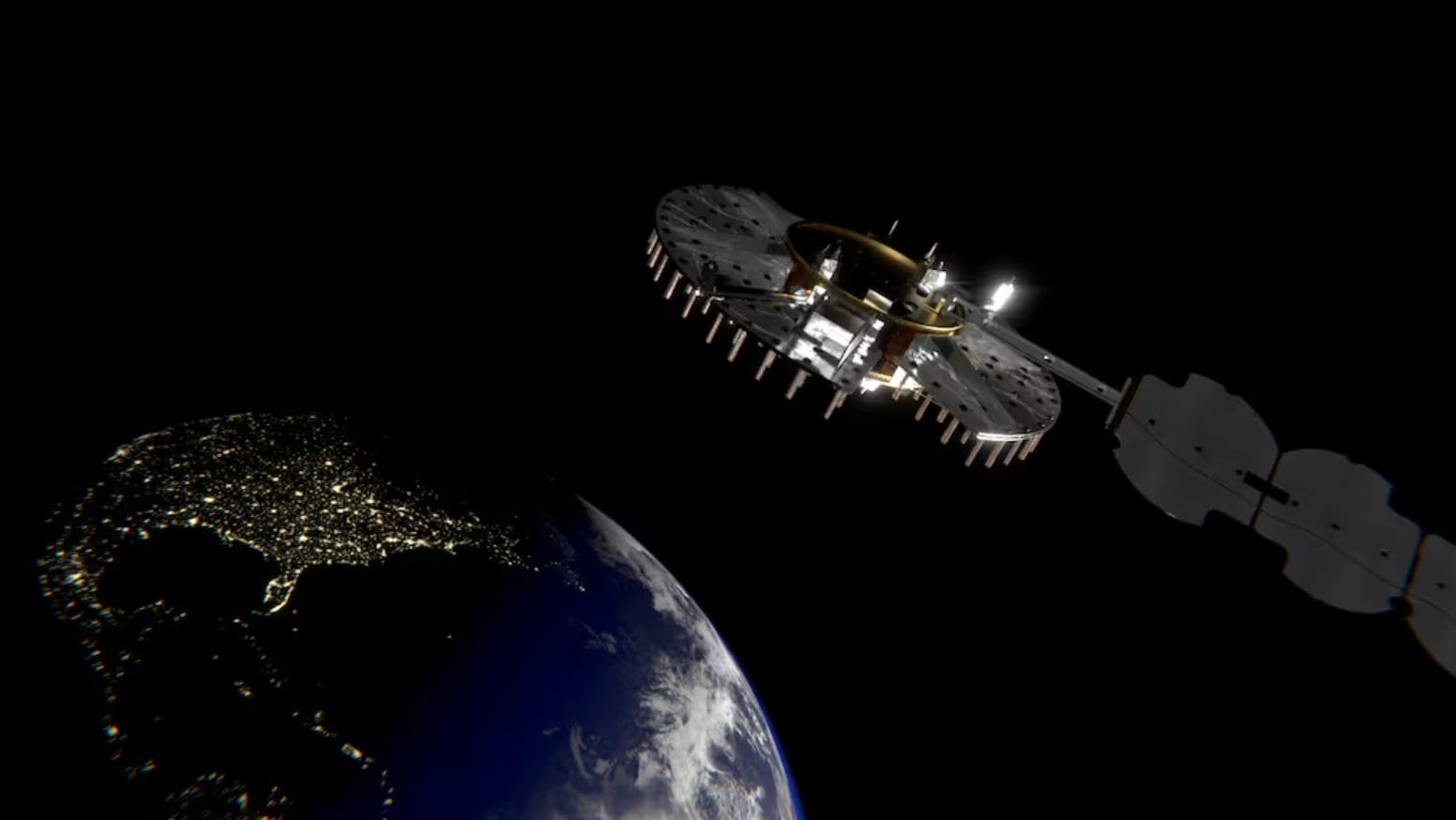
Navigation Technology Satellite-3 tests will demonstrate technologies for future GPS satellites. (L3Harris image)
By Courtney Albon | Defense News
The Space Force and United Launch Alliance launched an experimental satellite today, kick-starting a year of demonstrations that could bring new technology to the GPS mission and the broader positioning, navigation and timing enterprise.
The National Technology Satellite-3 spacecraft, or NTS-3, launched from Cape Canaveral Space Force Station in Florida and was the first national security flight for United Launch Alliance’s Vulcan rocket.
Built by L3Harris as part of an Air Force Research Lab and Space Systems Command project, NTS-3 was designed to experiment with new positioning, navigation and timing, or PNT, signals and payloads that could be installed on future GPS satellites and shape future capabilities and operational concepts for spacecraft, ground systems and user equipment.
The satellite was supposed to launch in 2022, but delays to Vulcan — its long-scheduled ride to geosynchronous orbit — kept it grounded for years.
Joanna Hicks, a senior aerospace engineer in AFRL’s Space Vehicles Directorate, told reporters ahead of today’s launch her team is ready to finally see the NTS-3 satellite take flight, adding that the lab is “overdue” for a PNT experiment.
Shruti Gurudanti, leader of Rose Law Group space law practice, explains in RLGR: “This launch highlights the growing need to address security, privacy, and international coordination issues around emerging GPS technologies.”