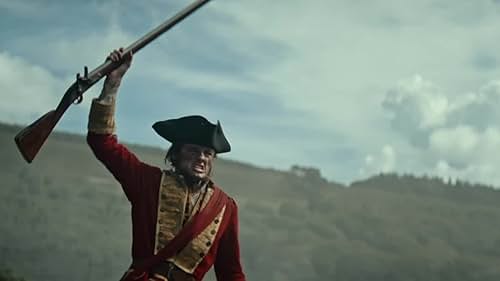
Photo via IMDb
By Keith Walther | Rose Law Group Reporter
What better way to ring in America’s semiquincentennial than a story about its premiere Founding Father? “Young Washington” is a biographical film from Angel Studios, who has a knack for delivering compelling true stories to the big screen. This story, however, feels like the wrong George Washington story to tell, diminishing the patriotism audiences would expect to feel while watching the figurehead of the birth of this nation.
As a young man in Virginia, George Washington (William Franklyn-Miller) aspired to obtain a Royal Commission within the British Army despite his mother Mary’s (Mary-Louise Parker) misgivings. Beaten down by multiple rejections, George resigns himself to serving for the Virginia Militia, where his leadership results in disastrous defeats and surrender to the French during the French and Indian War. Unrelentingly, he picks himself up to learn from his failures and fulfill his destiny.
Considering the historical impact of America’s 250th birthday, the choice to focus this George Washington story during the French and Indian War timeline rather than the Revolutionary War timeline is an odd one to say the least. “Young Washington” is co-written and directed by Jon Erwin, who is primarily known for his faith-based inspirational films like “I Can Only Imagine” and “Jesus Revolution.” To his credit, he continues his emphasis on the triumph of the human spirit by showing a more fallible George Washington who stumbles more than a couple times on his way to greatness. He successfully generates interest by focusing on a piece of American history that is rarely depicted and Washington’s role in those events. However, depicting this young future American hero as a British Army fanboy, while accurate, it loses connectivity value with him being shown as Britain’s pawn during this conflict with the French. Without a stronger emotional connection to the story like “The Patriot” was able to achieve in 2000, this becomes more of a clinical portrayal designed for a history class.
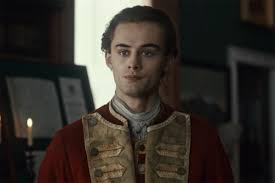
As far as the historical accuracy element is concerned, Erwin does not stray far from the truth. The geopolitics for the time are well-captured, Washington’s flawed battle strategy, including what takes place at Fort Necessity, is very true, and even the battle where George’s horses were shot out from under him and his coat had multiple bullet holes but suffered no wounds himself is completely accurate. He does take liberties throughout with the characters, timelines, and dramatizations for efficiency purposes. Erwin also glosses over the topic of slavery, briefly showing it, but giving no depth or context. While he doesn’t outright avoid the fact that Washington and his family were slave owners, he certainly does not advertise that he was actually one of the largest slaveholders in Fairfax County, Virginia.
Visually, this film has a made-for-the-History-Channel type of vibe to it that undercuts its messaging. Whether it’s the colonial set pieces, the props, or even the costuming, there is a noticeable cheapness that will remind viewers of taking fieldtrips to those reenactment villages, but no flapjacks are handed out at the end of this trip. Erwin makes up for this with wide-angle landscape shots that showcase the wild, untamed nature of the American frontier, and then switching to handheld tracking shots to capture the intense chaos of the French and Indian battles.
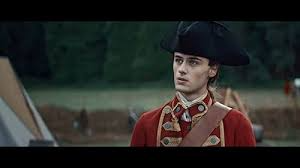
While the choice of story may be the biggest weakness of the film, the casting choices place a close second. Young English actor William Franklyn-Miller playing the titular role is not a disaster, but his inexperience shows. He may have the height to authentically play Washington at 6’4”, however, his meekness and obvious lack of confidence make him feel a lot less physically imposing than the historical figure was known to be. The impassioned speeches he attempts to make in the film lack convincing fire and intensity, flatlining those key emotional moments. Even his battle yells lack conviction and feel forced, creating a very bland performance.
Apart from the great Ben Kingsley, the rest of the supporting cast is equally ill suited for their respective roles. Mary-Louise Parker acts like a fish out of water as the Washington matron. The former star of “Weeds” struggles mightily to deliver her lines with a trace of believability for that era, making it seem like she was playing dress-up for a “Saturday Night Live” sketch. Andy Serkis should remain behind the camera for voiceover work because his acting is simply over-the-top as if he were performing on stage.
Surprisingly, there has not been a feature film for the big screen about George Washington until now, so it is disappointing that this is the story they chose to depict. Still, “Young Washington” is historically interesting enough to watch, but not impactful enough to warrant a trip to the theater over the 4th of July weekend.
This movie earns