(Disclosure: Rose Law Group represents Resolution Copper.)
By Madelaine Braggs | Rose Law Group Reporter
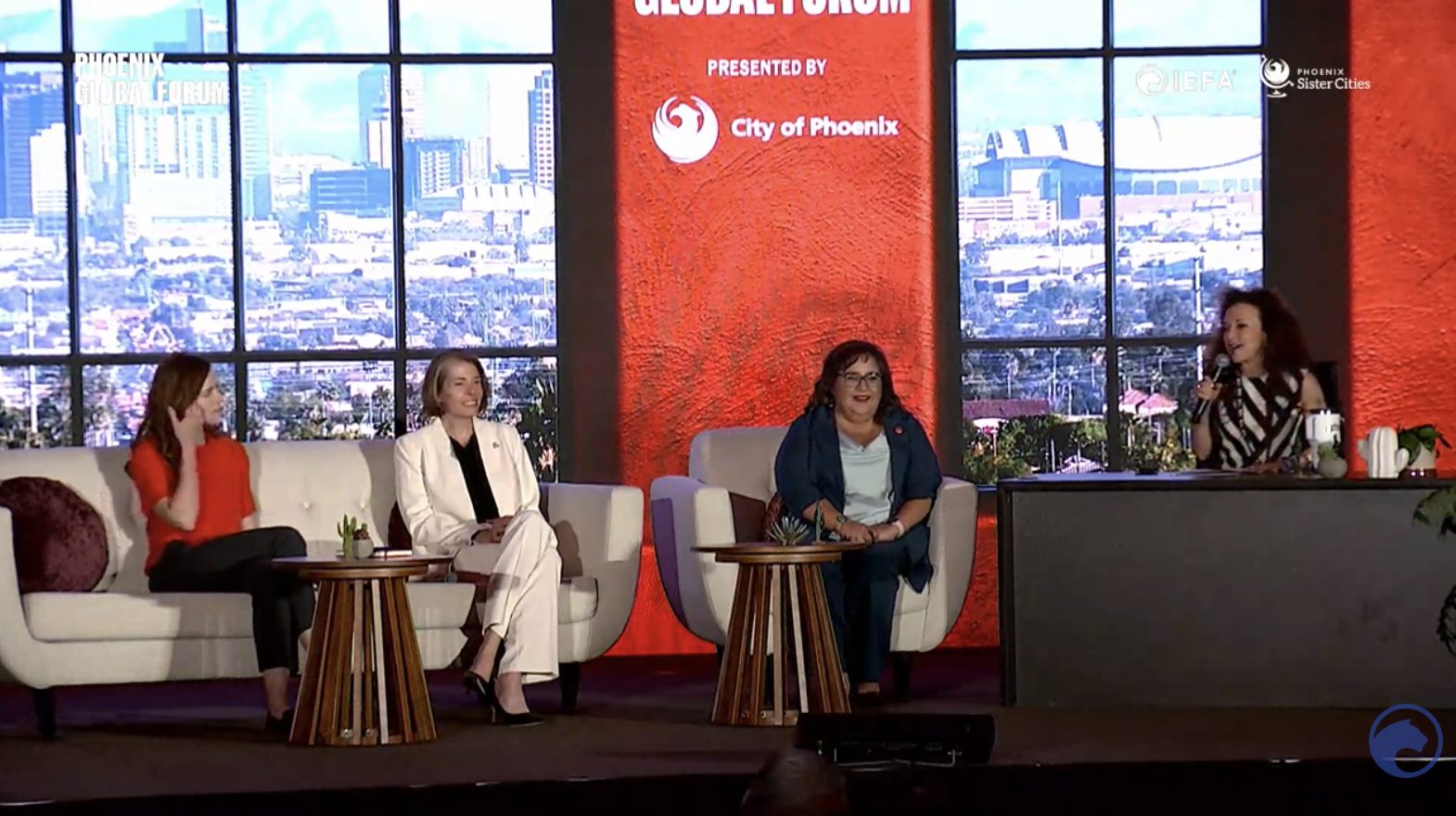
At the Phoenix Global Forum, Arizona mining leaders discussed why copper has become one of the most important resources tied to artificial intelligence, electrification, energy infrastructure and national security. The panel, moderated by Jordan Rose, Rose Law Group founder and president, featured insights from Superior Mayor Mila Besich, Executive Director and Dead of School of Mining and Engineering Resources at the University of Arizona Kray Luxbacher, President and General Manager of Resolution Copper Victoria Peacey.
Here are five major takeaways from the discussion.
1. Arizona is positioned to lead America’s copper future
Panelists emphasized that Arizona already produces the majority of U.S. copper and could play an even larger role as demand grows from AI systems, data centers, electric vehicles and aging power grids. Luxbacher called Arizona’s mining ecosystem one of the most technologically advanced in the country, with cutting-edge automation and innovation already being deployed.
2. Resolution Copper could reshape the industry
Peacey described the Resolution Copper deposit as the second-largest undeveloped copper deposit in the world, with production expected to begin in the mid-2030s. The project is expected to eventually support about 3,700 jobs and includes partnerships with universities and apprenticeship programs to build the future mining workforce.
3. Community partnerships are critical to mining success
Mayor Besich repeatedly stressed that mining projects cannot succeed without strong relationships with local communities. She highlighted years of collaboration between Superior, Resolution Copper, Native American tribes and local stakeholders, saying the process helped transform Superior into a model for how mining communities and companies can work together.
4. Permitting and litigation remain major challenges
Panelists said one of the biggest obstacles facing mining projects in the U.S. is the lengthy and uncertain permitting process. Peacey explained that Resolution Copper has spent years in litigation after completing its environmental impact statement process, while Luxbacher noted that opening a mine in the U.S. can take around 20 years. Speakers argued that more certainty in timelines is needed to attract long-term investment.
5. The future of mining depends on trust and long-term investment
The panel concluded that modern mining requires more than extracting minerals — it also requires investment in infrastructure, education, emergency services and environmental responsibility. Speakers said rebuilding trust in mining will depend on transparency, collaboration and ensuring communities directly benefit from the projects around them.