Arizona’s Copper Crossroads: Inside the High-Stakes Debate Over Mining, Permitting and the Future of the U.S. Supply Chain
(Disclosure: Rose Law Group represents Resolution Copper.)
By Madelaine Braggs | Rose Law Group Reporter
At the Phoenix Global Forum, a panel of Arizona leaders, mining executives and academic experts framed copper not simply as a commodity, but as a strategic imperative at the center of electrification, artificial intelligence infrastructure, national security and economic competitiveness.
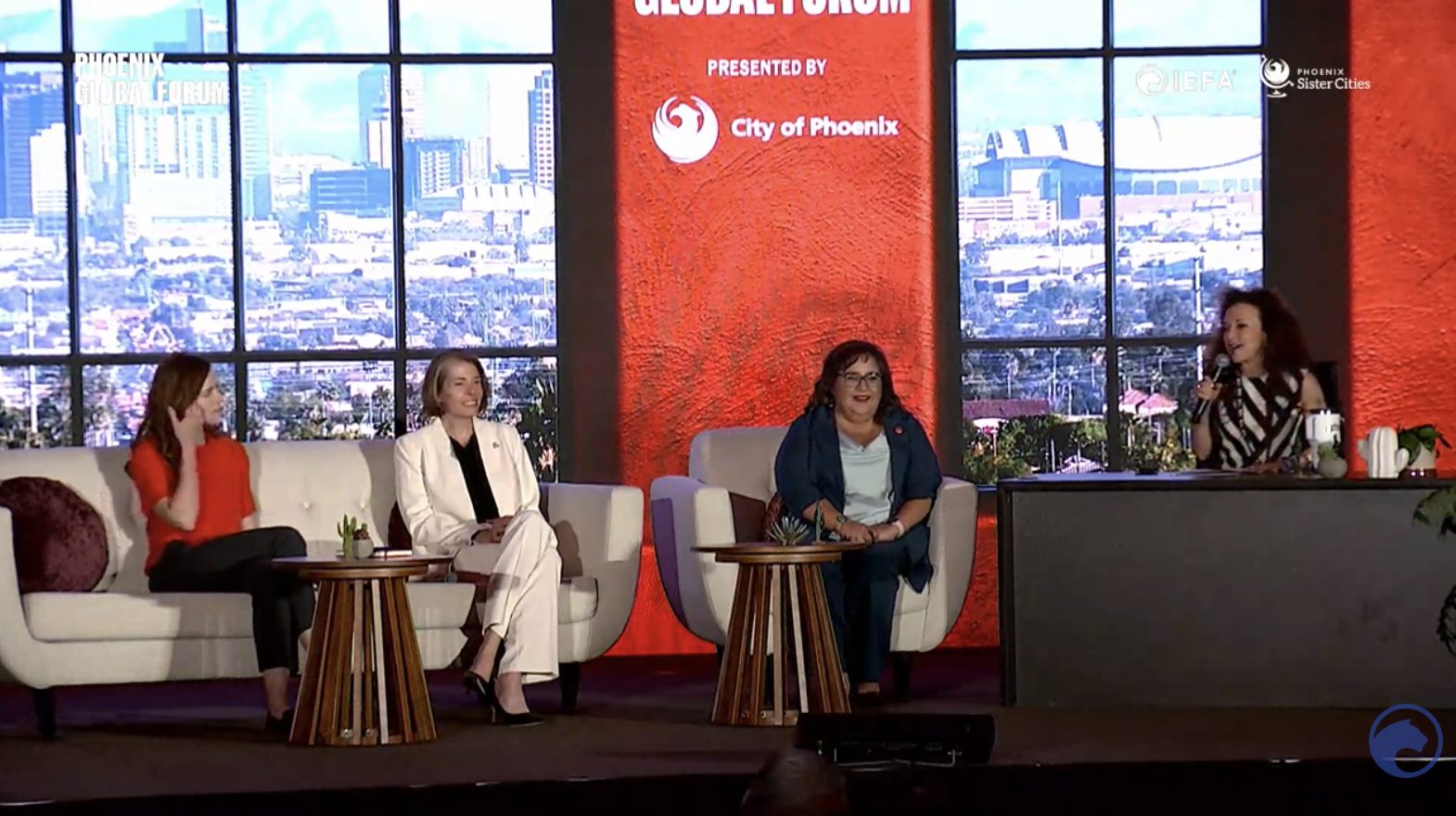
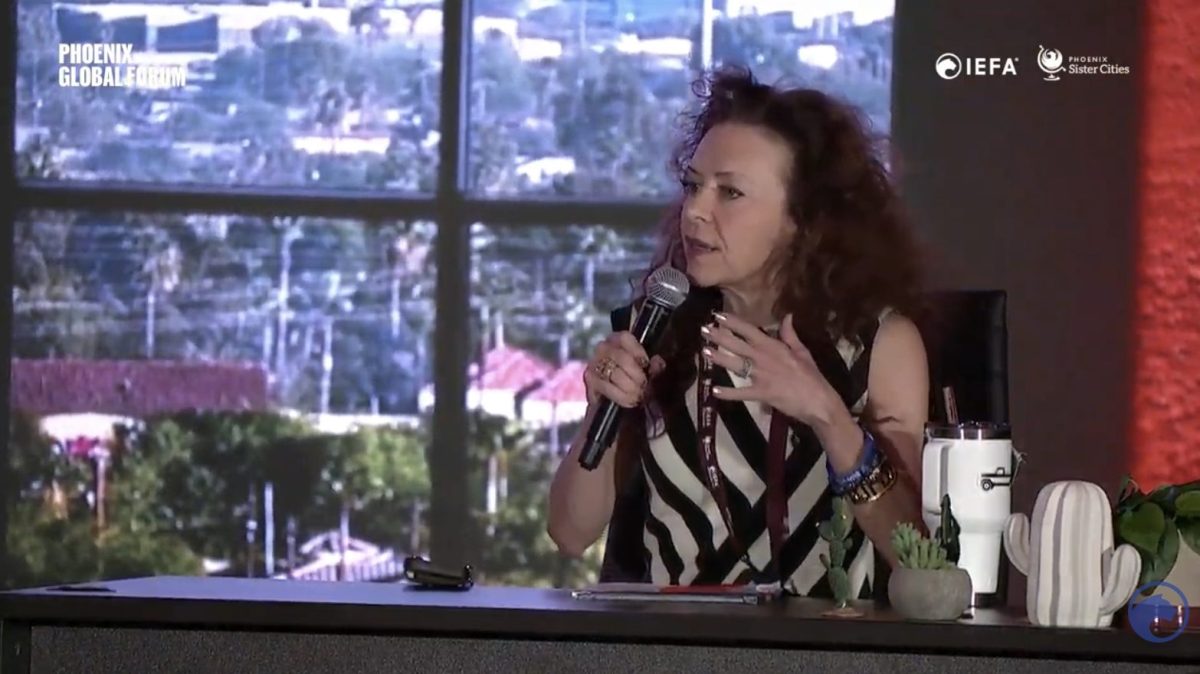
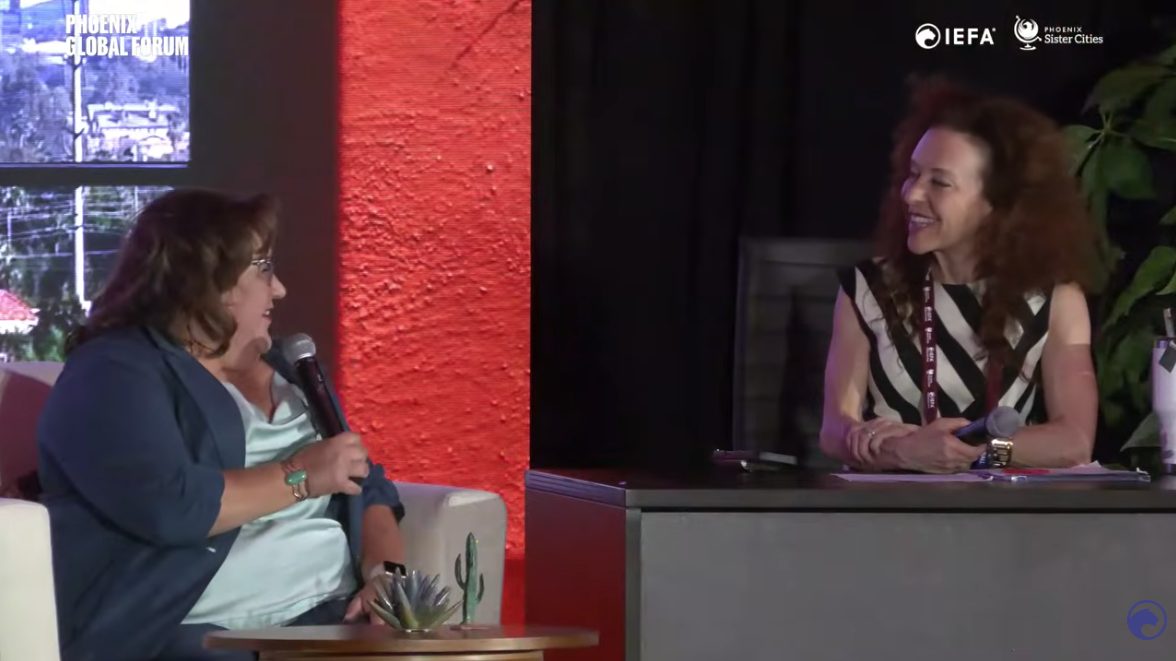
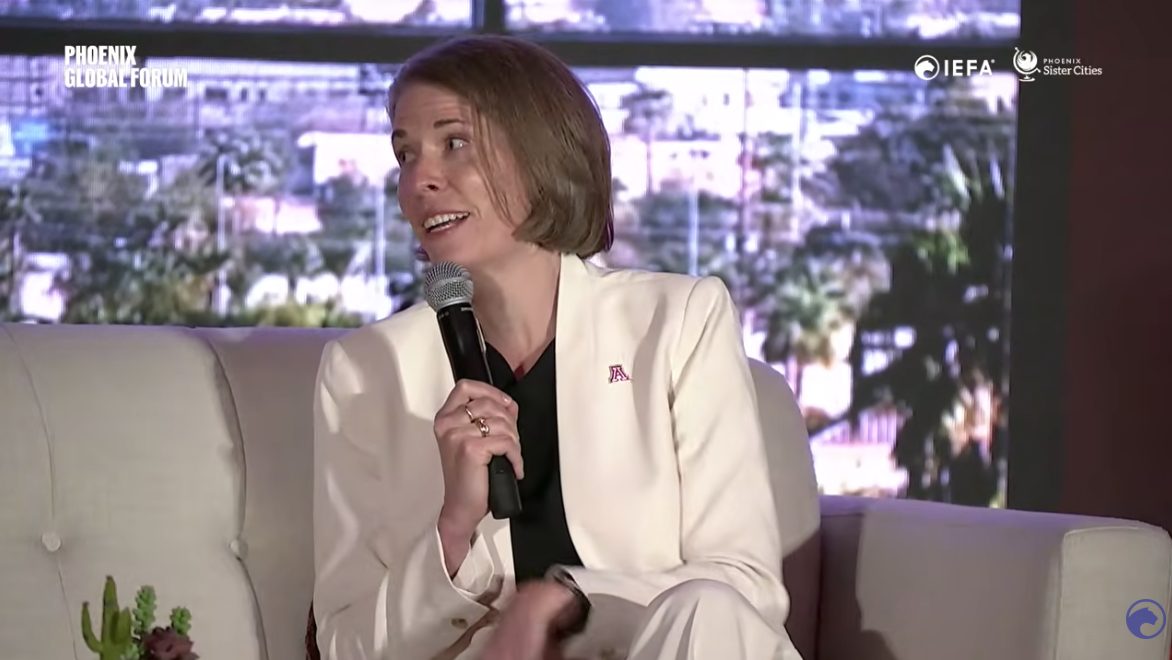
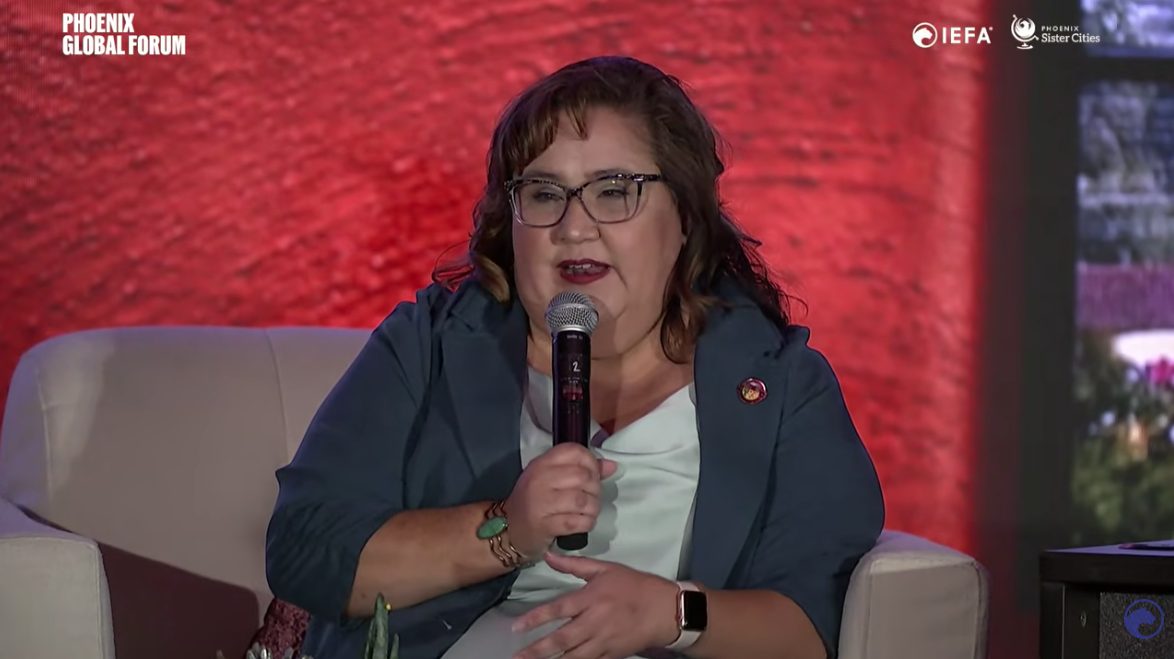
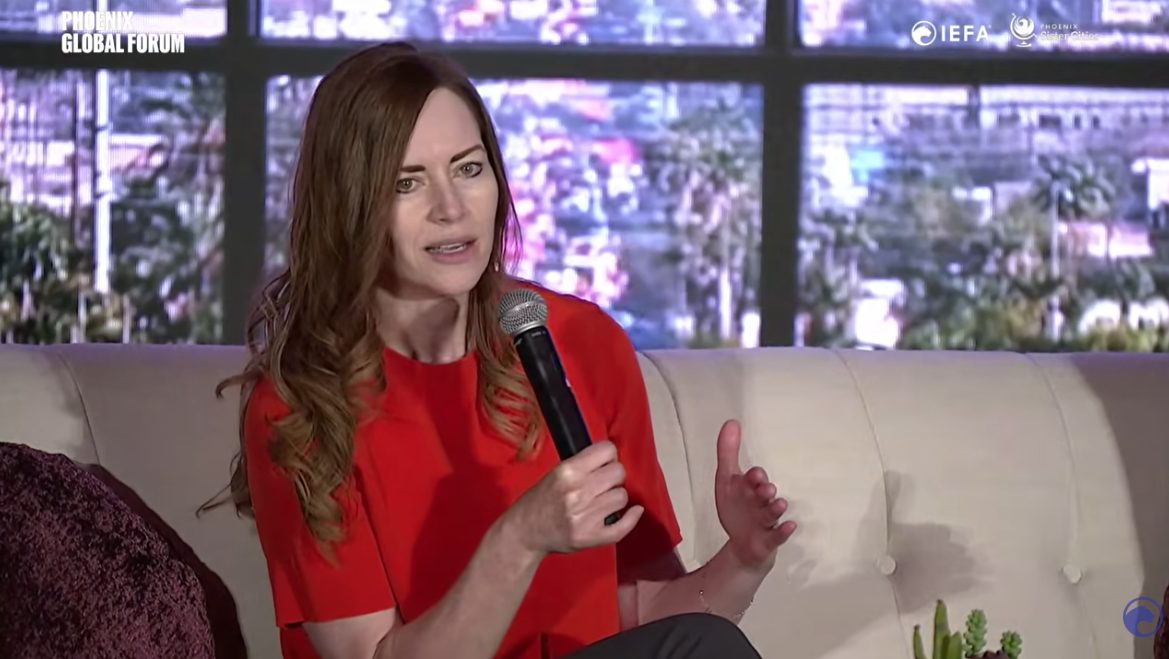
The session featuring Superior Mayor Mila Besich, Executive Director and Dead of School of Mining and Engineering Resources at the University of Arizona Kray Luxbacher, President and General Manager of Resolution Copper Victoria Peacey and moderated by Jordan Rose, founder and president of Rose Law Group the discussion explored how Arizona — long known as “The Copper State” — is navigating the tension between accelerating domestic mineral production and maintaining environmental stewardship and community trust.
How does Arizona fit in the global market?
Luxbacher: Globally, we’re seeing incredible demand for copper or minerals, and we are ‘The Copper State,’ producing 70% of U.S. minerals. That’s driven by a lot of things; the nexus of decarbonization and electrification, citizens are demanding a lot more energy, aging grids, expanding grids, meeting demand for data and AI systems. The U.S. has not invested much in mining in the last decades. Arizona is a fun place to be if you work in mining, with so many mines coming online. We’re surrounded by the most innovative technology suppliers and if you look at prior mining in Arizona, we have the capacity to produce 80% of the minerals in the U.S.
When you compare to what other states are doing, what do you see in Arizona’s future?
Luxbacher: What sets us apart is our mining ecosystem. We have some of the most technologically advanced greenfield and brownfield mines in the country. We’re installing automation in massive brownfield sites, which is unusual and extremely difficult. That makes us an ecosystem where you can come and see the best tech, and then when you see how communities and miners work together it’s also the place where you can see the very best of working with a community and engaging a community. When I think about what I want to see in Arizona in the next 10 years, I want communities to want mining the way they want Amazon or a company like that to come. I think we have the capacity to demonstrate that here.
Superior has historical and future significance in mining. Can you tell us more about that?
Mayor Besich: Super has been a historic mining community, and went through tremendous amounts of booms and busts. Resolution first came into Superior and said, “We have ore body. We want you to have autonomy, we don’t want you to become dependent on this monolithic project. We’re going to help you.” That’s been part of the testament to what’s happened in Superior for the advancement of Resolution Copper. What I didn’t know when I became mayor was that the environmental impact statement process for Resolution Copper has been one of the largest and most complex processed under NEPA. That’s something here in America we should be proud of, that we have a process that protects the environment and ensures that we are mining correctly and ensuring we can continue on this legacy.
We found that most people don’t know how a cell phone works. We’ve found people are emotionally connected to why they think mining should or shouldn’t work, but they aren’t aware of how critically important it is to advance our economy across the globe.
I realized towns like Superior and the Copper Corridor communities are the lifeblood of the economy, we’re from where critical minerals that push the entire world forward are coming from. I’m proud of the work we did because even when the federal government process wasn’t necessarily connected to the people affected by this project, the company was, Rio Tinto was.
How do we co-design this mine in a way that’s going to be profitable and meaningful to the community? We have so many exiting things happening right now, with our 546 acres we have to develop, our downtown infrastructure that we’ve improved. We’ve been able to do that because we have solid partners at the table and for rural communities it is really critical to have that.
Moderator and President of Rose Law Group, Jordan Rose says, “If you ever have time to visit Superior, I highly recommend it. It is one of the most beautiful places you could ever imagine and the main street has such character and it’s driven by such history, it’s fantastic.”
When you heard that the land exchange was approved, what was your sports-like celebration?
Mayor Besich: I wish we had all been together as a big team all in one place. I was refreshing in my room in Washington, D.C. when the forest service calls and they just say, “Mayor, it’s done.” And I say “What’s done?” They said the land exchange and record of decision, “It’s done. And it happened to be my birthday.” There was definitely some celebration, especially for many of us who has worked closely with Senator John McCain on this. There was that moment to remember his leadership, to not only make sure there was a good beginning first step for the mine, but also the town of Superior. The history behind this project is epic. Where we are today is completely different. I know we have other communities asking how are you working with private business to improve your community how are you arranging these agreements and we’ve had to tackle things like water and we’ve solved those problems.
There’s a lot of work, but it’s an exciting time to reflect on the work that we’ve done and know that we’ve set a good foundation for how mines and communities should work together.
The land exchange was done, Vicky you were there. How long have you been working on this and what’s next?
Peacey: This was a decade long co-design. And with a project this big, sometimes that’s how long it takes to get the data and get this good faith two-way dialogue. What came out of the backend of the environmental impact statement looks nothing like what we originally submitted, but that’s because of how much of a collective voice was involved in the process. The town Superior, and also the other five communities of the Copper Corridor and 11 Native American tribes. We stepped into each others shoes and saw the issues through each others eyes.
In the 80’s the U.S. was globally dominant in mined and refined copper. There were about 80 operating mines, 60 were copper only, and the others has copper as an additional coproduct. We had 22 smelters and refineries to handle scrap and copper concentrate. It was an incredible time. The amount of talent that existed and coordination between universities and academic institutions, and how many people were being graduated out of the system that were mining engineers, metallergical engineers, geologists and etc, but since that time it’s just been a downward spiral, we haven’t continued.
We’re ‘The Copper State.’ Arizona’s the most important. We have the resources here, but the majority of the copper that we produce that is mined copper in the U.S. comes from a handful of mines, most of which are old open pits. The companies that own them, we’re one of them, we’re putting in every ounce of technology to get those ever small quantities of copper out of large amounts of rock. Then when you look at smelting and refining, today you look and we only have two operating smelters and refineries. All of our final refined copper comes out of Utah or Arizona. The environment for mining has changed, I think the country understands that maybe not everyone likes it but ok, we probably really do need it. And we’re able to do it in a way that society demands of us, which is responsible. We have the gold standard of regulations in the state and federally. We ensure every bit of spend is local.
When you say there’s been a downward spiral of production since the 80’s, why is that?
Luxbacher: Well in the U.S. we were all too happy to outsource production to other countries, where we could get it more cheaply. Frankly the environmental standards were not the same, the social standards were not the same, were were more comfortable being decoupled from that. Now, we are not so comfortable being decouples from those drivers, and so we just didn’t invest in mining or the technology. You can’t turn mine on and off. It’s a very long process.
Now, I think we won’t see the bust cycles we used to see, because it is so challenging to bring your supply up to meet demand. Demand is incredibly high, we have very few smelters left in the U.S. Even if a mine operator could go and just turn it up and produce all the copper they possible could, we couldn’t refine it and smelt it. So, we’re unlikely to be able to flood the market the way we used to. Miners are good at production, when they see demand they start producing, but without smelter, we’re unlikely to see those huge boom and bust cycles that we’re used to seeing.
When the mine goes into production, what will those stats of production be?
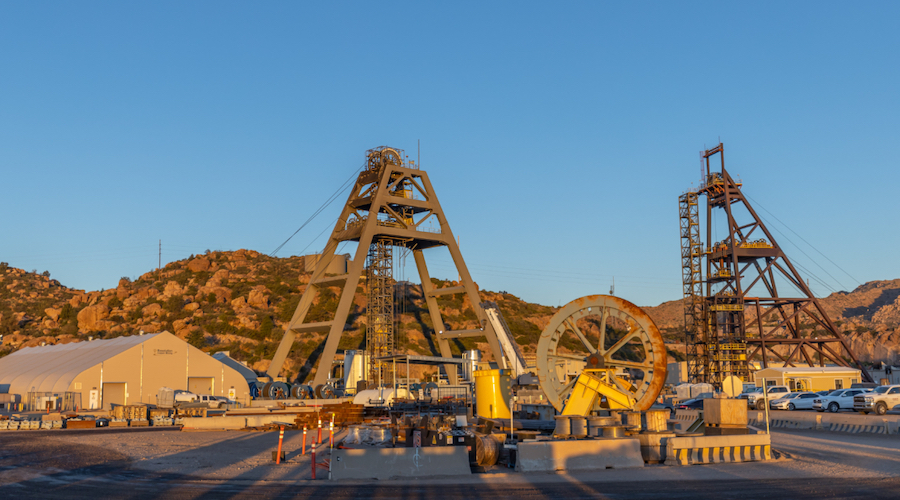
This deposit is a geologic wonder. It’s one and a half percent copper spread over two-billion tons, this is the second largest undeveloped deposit in the world. It also has critical minerals such as silver, gold and other “goodie” metals.
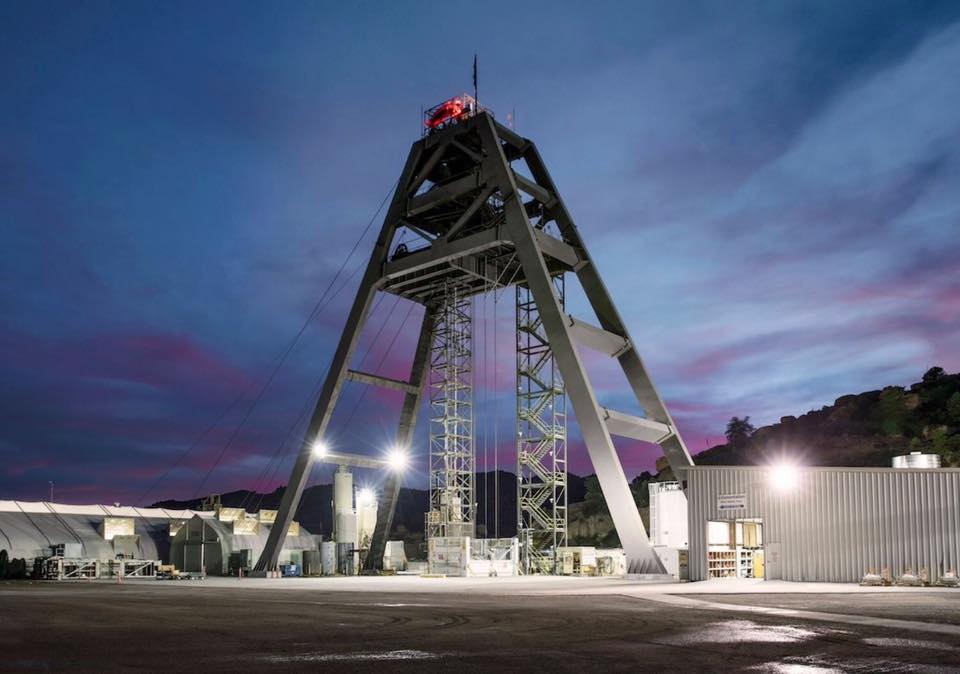
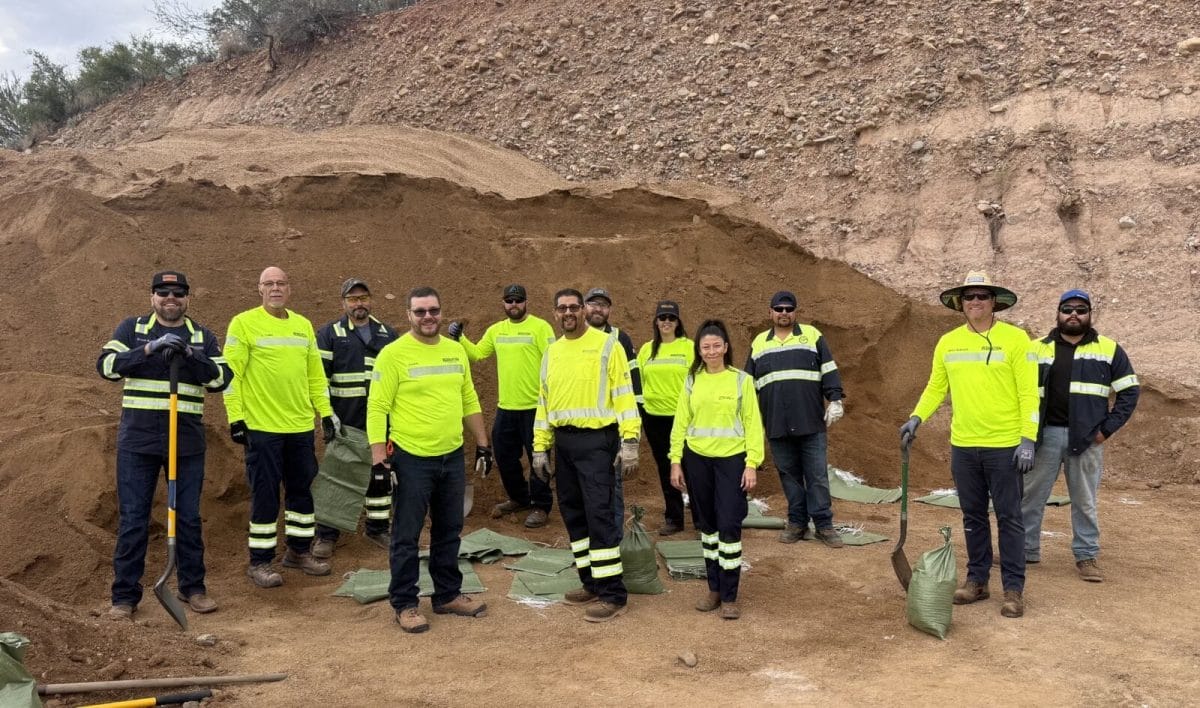
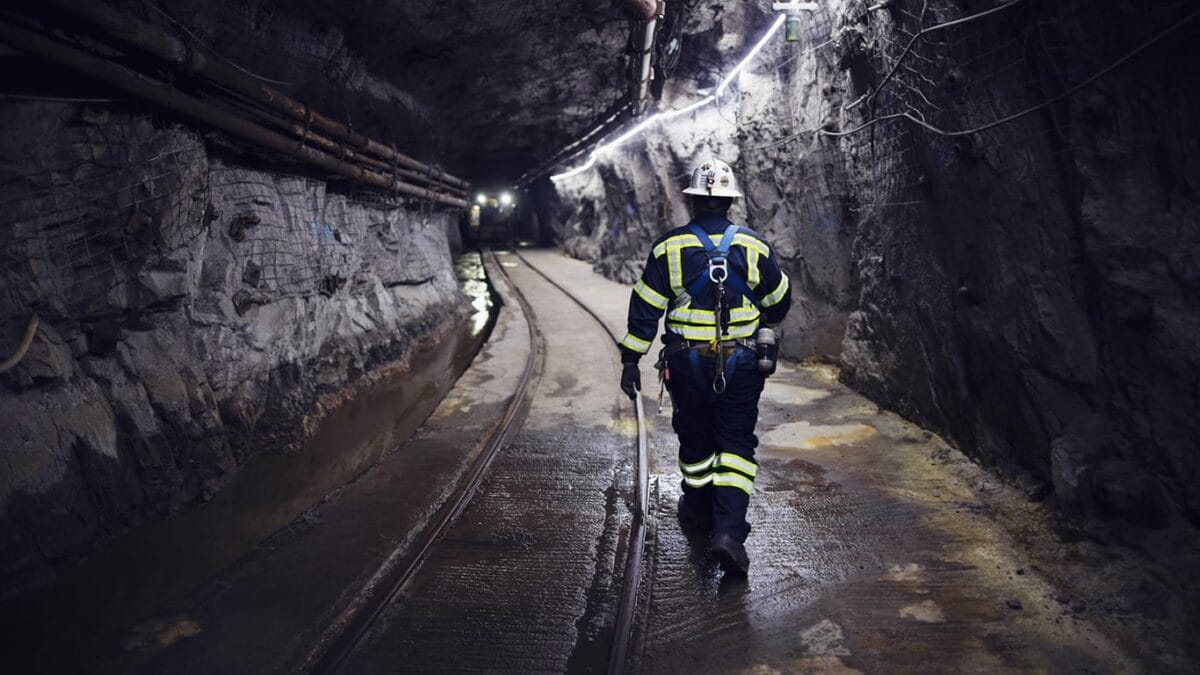
Production is going to take us a number of years. We’re starting to hire more people. We’ve sunk two shafts with quite a bit of infrastructure on site. We have to do development tunnels. We’re in that eight years of construction phase, we’re in a large ramp up, 400 people today, this time next year thousand range of people. Continue to ramp up over time. First production in the mid 2030’s. I know that sounds like a long time, but if you look at the global supply and demand that’s right when the production in the U.S. will start to come off, right as we come online.
We will have about 3,700 people working, and we have to grow that workforce ourselves. We have apprentice programs, collaborations with universities, it’s a challenge but it’s going to be fun. We have 2,000 applications and expecting to see double that for over 60 open roles.
There’s science there’s engineering and a lots more innovation in partnership with universities.
Luxbacher: We’ve tapped out supplies from the near surface, so what Resolution is doing is applying technology to go about 7,000 feet deep to get to that high concentration. That requires an enormous amount of engineering and technology. Arizona has some of the most advanced open pits in the world and some of the largest. Some of them, like the Morenci Mine, have been around for 100 years. They’re having to apply even more technology to go even deeper.
Mayor Besich: If you look at this generationally, going back to 2006 when Resolution started developing their future for this mine and building shaft 10, that generation of Superior residents have become those new miners. You’re starting to see the benefits from that in our small community where our young residents are staying there, they’re starting their families and that’s incredibly important when you’re talking about having a community that it going to support the workforce. We can’t have communities in AZ that are supporting the industry and not able to buy their ambulance tires and other policies are making sure that revenue comes back into Cities and Towns in a meaningful way.
We can say we’ve built that diversified economy, we’re home of the Boyce Thompson Arboretum, we want to be leaders in eco-tourism. Next week, we’ll be talking about mines and how to develop trails… What’s happened here has set a precedent for how these operations and collaborations should go so communities can say, “We are mineral rich and this is better than Amazon.”
Peacey: We can’t have this big mine and not have a town that’s equally successful. Emergency services is one area. Superior has a fully functioning emergency services department and we’ve worked closely making sure their personnel know our mine and how to navigate it.
It’s been 20+ years of this “arranged marriage” How did you make it so good?
Mayor Besich: Around 2013, one of our first challenges came about and that was where are these tailings going to go, because this was really going to be kind of like this new mine where tailings were going to go in an old open pit and then the industry changed and that open pit wasn’t going to be available and what we did is said well we need like a community working group and I thought that was very bold of a large company like Rio Tinto to say, “Let’s bring all the partners to the table, including those who are opposing us.” And that group has now met for almost 10 years now, over 10 years. They’ve had dinner together every month. Now, we don’t meet quite as often, but that’s where we talked about hard things lik water, like the science that was happening around what the Forest Service was finding. And we had those hard decisions.
I will say that local leadership matters extensively, very importantly, because had we not had a town manager that was able to handle this, most small towns could not handle the magnitude of work that Superior had to handle. So, if I was advocating for the next small town that might be this mineral rich, there needs to be an ombudsman because not all towns can handle this. I was from Superior. I knew how important this was. My family knew how important this was to the future. There was no question in supporting this. This is where mining belongs. It doesn’t belong in other places.
So, how do you work through this process? And we’ve learned a lot, but it’s taken really sitting there and being able to have those phone calls that I can call Vicki and say, “We have a problem. We’re, you know, maybe our teams are getting a little, you know, off kilter and those relationships matter.” That we can sit together and have that conversation. We both want this to succeed, so how do we do that?
That’s leadership. And again, that matters to who’s sitting in the mayor’s seat and who’s sitting in the CEO’s seat.
Peacey: And it wasn’t always rosy, right? Like we had to hash through a lot of stuff that were really really tough. But I think that the fact that there was always that two-way dialogue, right? You were always at the table. We were always able to communicate and when you shut off communication, then problems start and you actually don’t solve anything.
“I think you both share these qualities of like firm, but kind and really care about the community and the business and both of those things and that is unique. If you don’t have those qualities in the two lead negotiators, maybe the ombudsman is the right way to go,” said moderator Jordan Rose, founder and president of Rose Law Group.
Mayor Besich: I know I talk to other mayors now and I have the opportunity to talk to mayors from across the world and we talk about how important these negotiations are and when you’re having like other types of global politics, it really what matters most is what happens locally. Can we help solve a problem before it escalates? And that’s where again like these ongoing litigations that keep happening at some point in America, we need to fix that. You can’t keep litigating something um in hopes that you’re going to get a better response because that that has actually hurt Superior. We’ve got a great partner. We need to move a lot of these projects forward to be ready for when they’re in full production, but we get stalled out every time there’s another court case. So we have to all start looking at this in a much more holistic way so that way everybody’s at the table and opposition groups have had the chance to be at the table and conversing with us and working through these challenges.
Luxbacher: I think you bring up a really good point when you look at for instance Canada and Australia which have very similar mining environments and social expectations and environmental expectations. What most mine operators say is it’s really hard to get permitted. Still really hard. But what we see is there’s some certainty in how it’s going to unfold. And if you don’t have that in the United States, then it’s difficult to come and make a big investment, right? If you don’t have some certainty about the timeline. And I think that is the problem. It’s not that we need to relax any of our standards. It’s that we need to provide a more certain timeline.
It can take around 20 years for a mine to open in the U.S. There’s a recent report that shows that to meet copper demand in the U.S., we would need to open a new copper mine every sinle year, which is just frankly impossible to do in the U.S. So it’s really sobering to think what it takes to open and new mine and to meet our needs.
Peacey: There’s sort of two steps to it. We’re talking about federal permitting, for one. There’s an environmental impact statement which is really a stakeholder process to make sure everybody understands and has a chance to weigh in and shape a project before an agency makes a final decision. That actually goes pretty well really if you set it up and you have a good engagement with communities and stakeholders. It’s the second part of the process, which is the judicial review, which tend to cause the litigation.
There’s legislation in Congress right now that aims to curb excessive litigation that holds up the already length permitting process.
How many years were spent litigating at this project?
Peacey: The EIS took about four and a half years, it was published in early 2021 and that’s when litigation started. We’ve been through uh the federal district court multiple times, the Ninth Circuit multiple times, the Supreme Court three times. One every step of the way, but that’s five and a half years.
Are there reforms that would be helpful for the mining industry, both federally or in Arizona?
Luxbacher: I think we’ve seen under this administration some things have been sped up, especially around NEPA. But the concern is always if oyu manage to get your mine permitted that way, will you end up being litigated against even more in the next administration? So it just introduces uncertainty which is really the challenge because mines don’t run on a four-year timeline at all.
Peacey: We’re a longterm business. It takes us a lot longer and maintaining consistency through those election cycles can be very tricky.
They said there should be more incentives for companies to clean up radioactive waste, because of a good Samaritan went into a community to help, the community would be much more supportive of the mines. Peacey says hundreds of abandoned mine sites give the industry a bad image. “Our history chases us everywhere we go.”
Mayor Besich: I think that’s again that critical engagement that companies have with the communities and existing mines probably need to refresh how they’re looking at how they’re supporting their host communities. And while our history and our economies have all been tied together, we have to start looking at what it costs for these towns to run and operate to support having the hometown for your workforce. And I think Resolution has really gone above and beyond.
We had very significant deficiencies because of statewide policies on our mining taxes and that type of reform. The communities of impact get very little of that tax. So, you’re struggling all of the time and you want to have that community with that community center with the proper education. You want to be that home that people want to live in. Resolution and the Town looked at every last need, and it was time consuming, but we’re proud of the effort that we put.
Hopefully everyone will see that mining towns are important. We’re trying to change that narrative by opening America’s largest mine. It’s a huge role for us and we looking forward to working with the U of A and the Board of Regents because Superior and the Copper Corridor have the opportunity to really help train those future miners.
As the discussion closed, the panelists repeatedly returned to a central theme: the future of American mining will depend as much on trust and collaboration as geology and engineering. Whether discussing workforce pipelines, environmental review, litigation reform or local investment, speakers emphasized that communities must see tangible value from the projects surrounding them. For Arizona, the stakes extend far beyond copper production alone. The conversation positioned the state as a proving ground for how the United States may attempt to rebuild domestic industrial capacity in an era increasingly defined by electrification, AI infrastructure and geopolitical competition over critical minerals.