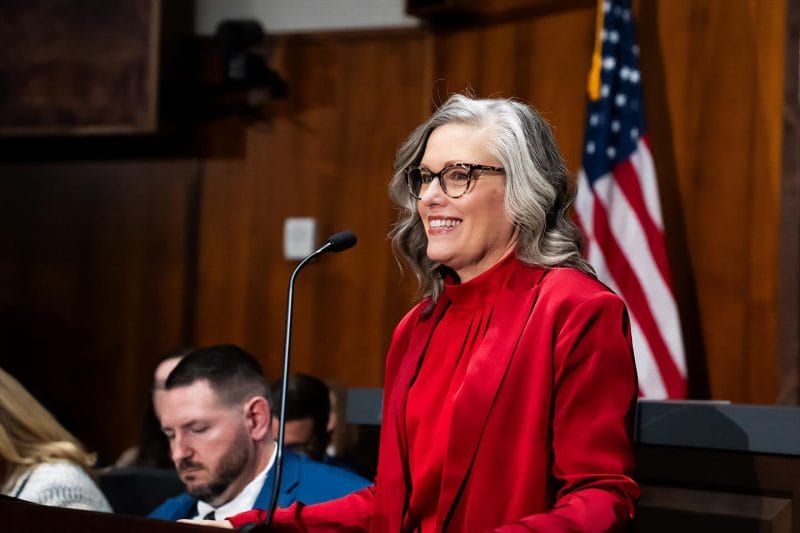

Jordan Rose Walton, founder & president of Rose Law Group who works with many advanced manufacturing companies, tells RLGR: “The good news is that new data centers are being built without any of the issues that have been raised in the past. Development of data centers is critical to our future. America can only remain competitive and safe if we are able to continue to advance technologically.” If we stop (or pause) in building more data centers, our great country, which has always been the place for entrepreneurial progress, will fall behind. The opposition is not based on what is being built today, and so I hope in these discussions around the country, American progress will continue to win.”
By Eva Terry | Deseret News
Last week in Springville, Utah, a group of young moms sat in Memorial Park, watching their toddlers play. In the high-70-degree weather, atop the park’s green grass, the conversation turned to data centers.
One mom had mused how she was going to keep her new infant cool this summer, and Matty Shmitz responded with worry that the approved data center in Box Elder County was going to make the summer’s heat worse.
In a later conversation with the Deseret News, Shmitz described the data center as a “constant numb pain in the back of my brain.”
Through TikTok, Instagram and news reports, Shmitz said she has developed serious concerns about the data center.
Will it use an inordinate amount of water? Where will that water come from? Will it drive up the cost of electricity and increase the temperature? And at the root of it, why are we risking Utah’s beautiful land to fuel artificial intelligence, when it seems like artificial intelligence will hurt American society?
The Stratos Project is one of more than 1,800 U.S.-based data centers in various stages of development. Once built, it will join more than 3,100 data centers already in operation across the United States, the earliest of which were built in the 1990s.
Backed by “Shark Tank” investor Kevin O’Leary, the project as planned is massive compared to other data centers in the U.S. At full buildout, it will have a power capacity of 9 gigawatts — roughly 90 to 225 times larger than the average data center, which uses 40 to 100 megawatts.
These existing data centers power the digital infrastructure behind the internet.
If you store images in the cloud, buy anything with a debit card, ask Siri a question, stream a show on Netflix, or load directions on Google Maps, you’re using a data center.
But data centers’ everyday utility has been lost in a haze of anxiety about new proposals. Shmitz is not alone in her concerns. More than half of Utah’s residents say they oppose the data center in Box Elder County, according to a Deseret News-Hinckley Institute poll conducted mid-May.
So it makes sense to ask: Are concerns about data centers well-founded?