(Disclosure: Summit Land Management is a Rose Law Group-related company and contracted with the firm.)
By Paul Basha, Kayla Amado of Summit Land Management
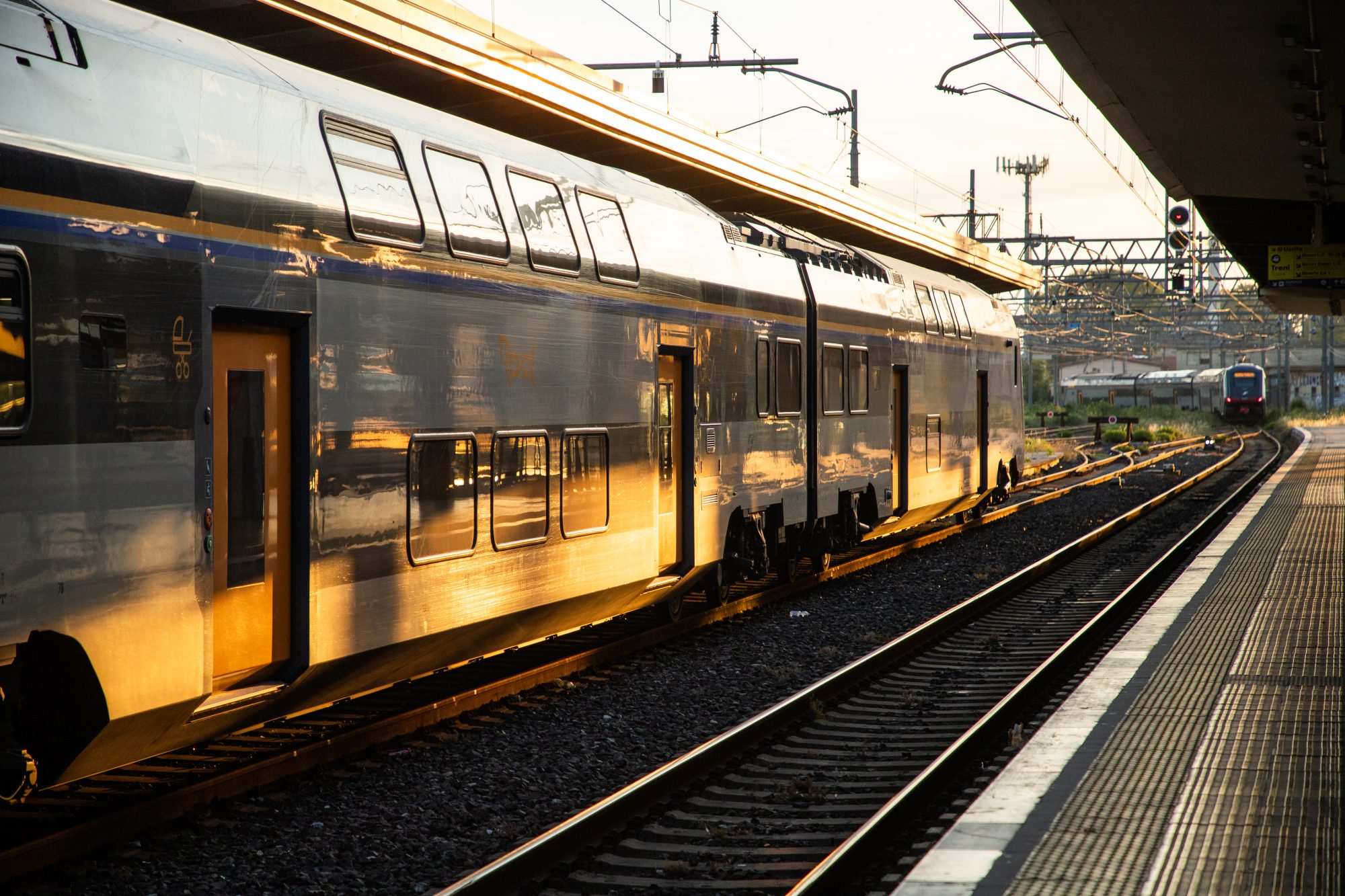
I recently returned from a three-week vacation throughout Europe. We used the extensive rail system to visit much of many of the countries: so very convenient! Why do we not have such a system in the United States?
I often hear this comment and question from people who visit mainland Europe and Japan, after their return to the United States.
One of my master’s degree professors at Michigan State University taught a course with a take-home final examination consisting of one question: Assume you have been hired by a fictional minimally developed country to develop a nationwide transportation system, what would it be? Fortunately, I took his course before he created this final examination, though I’ve been intrigued by the question for 50 years.
The answer to your question about the absence of a clean, efficient, inexpensive, convenient nationwide rail system in the United States is very long, involved, and requires history.
Though in brief: wherever your treasure is, there the desires of your heart will also be.
First, we need to discuss the dominant transportation form in our country, cars and trucks on roads.
President Dwight Eisenhower’s observations helped inspire the United States Interstate Highway System. In 1919, as a Lieutenant Colonel in the Army, he joined the first transcontinental military convoy from Washington DC to San Francisco. The 3,251-mile journey required 62 days. Later, immediately after World War II, Eisenhower drove on the German Autobahn while serving as the Supreme Allied Commander in Europe North Atlantic Treaty Organization He liked the German Autobahn best.
So, when he became President, he pursued creating a similar highway system in the United States, called the Interstate Highway System. The genesis of the system was a 1939 Bureau of Public Roads report to Congress called Toll Roads and Free Roads, and was funded by the Federal-Aid Highway Act of 1956. Construction began quickly in the 1960s though the entire system was not completed until the 1990s.
One of the final segments completed was the I-10 Papago Freeway Tunnel in Phoenix in 1990. Today, we call it the Deck Park Tunnel. It was originally planned to be an overpass, and Phoenix residents, politely, I’m sure, suggested putting it underground. We’re impressed with its 10 lanes, designed to serve 16,000 vehicles per hour and now serving 250,000 vehicles per day. Houston residents, however, are not so impressed, as one of their segments of I-10 has 26 lanes. It should not be on your bucket list.
From 1919 through this moment, us in the United States like our cars on our roads. Remember the television commercial, “See the USA in Your Chevrolet,” and the television show “Route 66”? The originally planned interstate system was 41,000 miles, intended to connect all metropolitan areas in the country. (Even Hawaii, Alaska, and Puerto Rico have interstate highway funding.) The current interstate system is approximately 49,000 miles.
The interstate system is pure socialism. The federal government used our collective money to provide a nationwide service for all of us. In 1956, the federal government converted this funding to a user fee by creating the Highway Trust Fund. The federal gasoline tax began in 1932 at 1 cent per gallon. Today, it is 18.4 cents per gallon and has not increased since 1993. The intention of the federal gasoline tax was to generate sufficient revenue to plan, design, construct, maintain, and repair the interstate and other federal highways – essentially a user fee. However, because vehicles now use far fewer gallons per mile, and because of electric vehicles, the federal gasoline tax no longer generates enough money to fund federal highway improvements.
States also impose their own gasoline tax, which vary widely throughout the country – from 9 cents per gallon in Alaska to 60 cents per gallon in Pennsylvania. Arizona ranks 46th highest at 18 cents per gallon. Keep driving in Pennsylvania off your bucket list as well.
In 2024, the Highway Trust Fund had $47 billion and spent $65 billion. Don’t try this with your personal finances. Our highways are no longer funded by a user fee. For the federal gasoline tax to fully fund all currently anticipated necessary transportation improvements on federal highways, the gasoline tax would need to be increased to 33 cents per gallon. The current nationwide average price for regular unleaded gasoline is $4.53 per gallon. In Arizona, the statewide average price for regular unleaded gasoline is $4.31 per gallon. Anyone excited about paying $4.64 per gallon? So, when you’re stuck in highway congestion, please remember that our current highway gasoline tax user fee is too low.
Back to history. As the interstate highway system was constructed, suburbs were created. The interstate highways near the heart of the metropolitan areas became a perfect route between downtown work and suburban home.
Suburbs have been part of human existence since at least the Roman Empire of 2,000 years ago. Many believe that the Egyptian and Mayan civilizations of 3,500 to 4,000 years ago had suburbs.
The first United States suburbs sprouted from streetcar lines in the late 1800s and early 1900s. Initial railroad engine technology was quite disgusting and inefficient. They produced steam and ash which darkened skies, smelled terrible, stung eyes, and damaged lungs. Initially, only 6% of the energy they created went to motion. By the early 1900s, efficiency improved to 25%, meaning 75% of the energy was still expended to something other than motion. Modern electric engines have 85% to 95% efficiency, meaning only 5% to 15% of the energy created is lost.
The interstate highways provide the greater areas surrounding urban centers with relatively short commutes. Would Goodyear, Buckeye, Ahwatukee, or Maricopa exist or thrive without I-10? Would Anthem exist or thrive without I-17?
The interstate highway system was never intended to be a home-to-work commute system, though people made it one. It led to the development of similar highway types, including the United States Highway system, such as US-60, and the Arizona State Route system, including SR-101, SR-202, SR-303, and SR-51. Would Mesa, Queen Creek, or Surprise exist or thrive without US-60? Arcadia manages just fine without a highway.
In our country we now have 4.2 million miles of roadways. For 70 years we have spent federal tax revenue on roads. We like them. So, we have them.
The dominant form of transportation throughout the United States from the 1860s to the 1940s, with their peak in the 1910s, was rail. Hard to believe now, with the current form of our transportation system, but the steel wheels on steel rails generated far less friction than the primitive rubber tires on primitive pavement. Trains were substantially faster than horseback or stagecoaches or early automobiles.
Starting in the 1850s, the federal government gave railroads, either at low cost or for free, the land for their track, plus much more land. Nearly one-half of the 200 million acres of valuable land in the original federal land grants was provided directly to the four large transcontinental railroads: Southern Pacific, Central Pacific, Northern Pacific, and Union Pacific. That’s an incredible head start. No other people or companies were given this grand bargain. To put that in perspective, 100 million acres is the size of current California, owned by only four private companies. That’s currently the third largest state in area, behind Alaska and Texas.
Because this now railroad-owned property was adjacent to the only transportation facility, this property became very valuable. The railroad companies were master capitalists. and developed this land at great profit. The railroad companies became extremely wealthy, and thereby exceedingly powerful.
An interesting financial system: the government takes the costs and private companies take the profit. Would have been a very different story if the railroads had to pay full market value for that massive amount of land.
Railroads were the first Big Business in the United States of America, and the only national industry in their formative years. Unsurprising that railroads were favored by federal and state governments.
One of the founders of the Central Pacific Railroad was Leland Stanford, who became Governor of California. A perfect partnership developed between the federal government, many of the state governments, and the railroad companies. With his considerable profits, Mr. Stanford founded a university, perhaps you’ve heard of it?
To counter the dominance of the railroad companies, the United States Congress passed the Interstate Commerce Act in 1887, establishing the Interstate Commerce Commission. One of the primary motives of this commission was to control and diminish the increasing power of the railroad companies. It was quite ineffective. In an effort to further limit the excesses of railroad power, Congress passed the Transportation Act of 1920, allowing the Interstate Commerce Commission to approve mergers and set minimum rates.
Somebody said that the road to hell is paved with good intentions. While John Steinbeck is credited with saying that the best laid plans of mice and men oft go astray, he actually was quoting a Robert Burns poem from 150 years earlier.
The well-meaning attempt to control the power of railroad companies actually worked in reverse. The Interstate Commerce Commission minimum rates were intended to keep the railroads from generating excessive profits. However, large companies could afford the minimum rates, new start-up railroad companies could not. Small railroad companies disappeared. Innovation stalled. The lack of competition resulted in stronger railroad monopolies and oligopolies, magnifying the wealth and power of the railroads. Thus, railroads further completely controlled transportation until the late 1940s.
The distrust of railroad companies grew to almost hatred, became widespread, and created a serious backlash. And the timing was perfect. While oil was discovered in the Middle East in the early 1900s, it took four to five decades before it was exploited. After World War Two, when “the sun never set on the British Empire”, the British learned that the middle eastern oil was close to the surface of sand, not buried deeply in rock like in other parts of the world. Additionally, one of the benefits of World War Two was shipbuilding and ship operation. We now had the knowledge to build and operate very large cargo-carrying ocean-going vessels. British Petroleum anybody?
So, in the 1950s, the railroads suddenly experienced serious competition. And, it was government-funded competition. The government paid for the interstate highways. The government paid high subsidies to the oil companies. Rockefeller and Standard Oil anybody? And the government had already paid for the shipbuilding expertise. And here we are again: the government takes the costs and private companies take the profit.
Ever heard the expression, “it is not the government’s job to pick winners and losers?” Really?! In the late 1800s, the federal government picked the railroads as the winners by charging them bargain prices for vast lands extending from Chicago and Saint Louis to San Francisco and San Diego – at exactly the time when our country’s people were ready to expand westward. The railroad companies took full advantage of this government funding for private fortunes. After eight decades, the federal government rebelled against the tyranny of their creation, declared railroads the losers, and declared cars, trucks, and highways the winners. It was now time for the oil and automobile companies to exploit government funding for profit.
Our westward expansion from 1860 through 1940 was very good for the country. (The original inhabitants would have a different opinion.) Rail transportation was the most efficient mode of land transportation at the time. The federal government backed the correct industry. Not a difficult choice, as the only other travel modes were waterways and horses, and there were no waterways west of the Mississippi River.
The railroads thought that their favored position was eternal, they had eight decades of proof positive. As they say: pigs get fat, hogs get slaughtered. The arrogant railroads thought they were in complete control, eventually learning that the true master, the federal government, was able to discover another option. The railroads not only lost their previously exclusive privilege to more land, they were also suddenly forced to pay taxes. In contrast, the federal government planned, designed, constructed, operated, and maintained the highways; and also subsidized the newly necessary oil drilling, all with our tax dollars, once again.
One of the difficulties with rail lines is that people still need a way to travel from their homes or workplaces to the rail stations. In the 1930s and 1940s, many railroads owned bus companies to provide these transportation services. Unfortunately, the Interstate Commerce Commission and other anti-trust policies in the 1950s and 1960s forced railroads to sell their bus companies. The resulting different motives for rail companies and bus companies led to inefficiencies and missed connections. Trucking companies did not have this difficulty as connecting roads were becoming ubiquitous.
Also, the price controls from previous decades very effectively diminished the ability of railroads to compete. The government-financed competitors always won. Eventually, in the 1960s and 1970s, railroad bankruptcies became prevalent.
Simultaneously, World War Two had discovered the promise of air travel. The federal government builds, operates, and maintains airports with taxpayer money. And uses taxpayer money to subsidize oil exploration and oil transportation. While the federal government does not directly subsidize passenger airplane construction, it does pay airplane manufacturers substantial sums of money for military aircraft, which then enables lower profit margins for passenger planes.
So, all was perfectly aligned to disrupt the largess of the railroad industry.
So, the people of the United States got 4.2 million miles of highways – none of them actually “free”.
The United States Congress passed the Staggers Rail Act in 1980, eliminating government regulation of rates, routes, and operations; though only for freight railroads. The return to competition for freight allowed the greater efficiency and capacity of rail travel to succeed. However, the federal government continued to seriously regulate passenger rail travel.
In the 1960s, Europe and Japan were able to capitalize on the inherent superiority of rail travel. Europe had the advantage of multiple relatively small countries. Thereby, the railroad companies were able to supersede the inherent competition and conflict between multiple governments. The private sector prevailed. Japan had the advantage of being mountainous islands. They did not have the luxury of wide-open-spaces for 26-lane highways.
Europe and Japan, for different reasons, both needed the much greater capacity of narrow railroad tracks. Trains can carry 70 to 100 seats in each of 4 to 10 railroad cars that operate every 2 minutes. This creates an hourly capacity of 60,000 people on just two tracks – requiring only 20 feet of width. Compare that to a 6-lane interstate highway requiring width of 150 to 350 feet while carrying only about 15,000 vehicles per hour.
In comparative terms, trains transport 3,000 people each hour per foot of land, while highways transport 75 people each hour per foot of land.
Consider that the I-17 north of McDowell Road is 325 feet wide. US-60, east of Dobson Road is 340 feet wide. The I-10 / SR-202 West Valley interchange is approximately 150 acres. The I-17 / I-10 interchange is approximately 185 acres. The I-17 / SR-101 North Valley interchange is approximately 295 acres. (Another large occupant of valuable land is Sky Harbor with 3,400 acres.)
And further, we only need all those lanes and land for 4 hours on weekdays. Though, we cannot use this land for any other purpose when we do not need those lanes on that land for 20 weekday hours and 48 weekend hours. (Excepting Los Angeles, San Francisco, New York City, and a few other metropolitan areas; where peak periods last 16 hours on weekdays. They’re not transportation utopia.) Trains function comfortably with the same amount of land during both peak and off-peak periods; they simply use fewer railroad cars for off-peak travel times and days.
The cost for a typical private vehicle; including depreciation, fuel, and maintenance is approximately 88 cents per mile. In Phoenix, the light rail fare is $2 for one ride, typically 5 miles, less than half of the cost of a private vehicle. A monthly pass offers unlimited rides for $64, equaling 32 cents per mile or less for typical commuting, with other trips for free.
The cost of constructing urban multi-lane freeways varies from $20 to $100 million per mile, though typically costs $40 to $60 million per mile.
The design and construction cost for light rail varies from $25 to $200 million per mile, though typically $60 to $100 million per mile. When train passenger volumes increase, the only required expansion is railroad cars, no highly expensive land or additional lanes are necessary.
Another huge advantage of electric trains, in particular, is the variety of available sources for electricity. The pathetic internal combustion engine is excessively reliant on fossil fuels (ignoring ethanol, as we should). This enables capitalist competition between multiple electricity options and providers. May the best and most cost-effective product win.
If transportation in the United States had been a truly capitalist endeavor, rail would have dominated from the 1940s through the current century, and beyond. When technology allowed train speeds of 100 to 200 mph, railroads in the United States would have capitalized on that opportunity, as they did in Europe and Japan.
If the federal government had not over-regulated railroad travel in the past, high-speed rail would now be ordinary in our country. If the railroad companies had behaved graciously with their government funding in the late 1800s and early 1900s, they would still dominate United States transportation, to our financial and lifestyle benefit.
Highways and airports did not have to justify their expenses to paying customers. The federal government paid a large percentage of the customer fares. Highways and airlines benefited from unfair non-competition. And all of that remains true. Thereby, we now rely on trucks, cars, roads, airplanes, and airports rather than objectively less time-consuming and less expensive intercity and intracity railroads.
OK, fine, I suppose we need airplanes to get to Europe, Japan, Hawaii, and other desirable places. And the journey from Miami to Anchorage, or San Diego to Quebec is best by air. But Phoenix to Las Vegas or Phoenix to San Diego or Los Angeles to San Francisco?
People tell me their time commuting one way every day for 20 to 50 or more minutes is precious. They listen to music or podcasts or audiobooks. Agreed. You can also do that on a train, plus produce billable work. If only we had that choice. Though unless you have a voice like Lady Gaga or Leslie Odom, Junior, please do not sing along on the train.
My suggestion is not to subsidize rail travel like we did from 1860 to 1950. My suggestion is to not subsidize car, truck, and air travel. My suggestion is to require car, truck, air, and rail travel to pay every cent of their entire costs, including land costs. Then through fair competition, generate their profit from customers. Allow capitalism to flourish and let the superior product prevail. It would be rail, high quality rail like Europe and Japan, definitely not like current New York and Chicago subways.
Many transportation professionals believe that Phoenix in the 1980s and 1990s had the opportunity to radically transform metropolitan development. We could have built rail lines instead of highways. If we had, we would have more land for homes, offices, shops, restaurants, parks, and athletic fields. Our communities would be surprisingly more compact, rendering travel times noticeably shorter. Our daily expenses would be dramatically less. A few cars are fine, too many cars are not. Now, most of us are trapped in our cars for virtually all of our travel time, with no meaningful choices. Cars and highways are wonderful servants, though terrible masters. We all experience that difficulty when our cars need repair.
So, my answer to my graduate school professor’s question of a transportation system for a fictional new country is to provide the most efficient and effective mode according to the travel distance. For travel of more than 2,000 miles; air. For travel of 100 miles to 2,000 miles; train. For travel of 20 to 100 miles in metropolitan areas; light rail. For travel of less than 20 miles, car, preferably two- to six-passenger autonomous shuttles. Importantly, user fees for all transportation costs, including the cost of land. Notice; no busses, not very efficient. Small and frequent or small on-demand shuttles are far more cost-effective than infrequent 50-seat, 80-passenger articulated busses.
Also, to concisely answer the original question, we do not have an efficient, convenient, comfortable, clean train system in the United States because, over the past 70 years, we collectively chosen to pay for a remarkably more expensive, substantially more land-intensive, and considerably less efficient highway system. Our daily addiction to this one form of transportation is no different than addiction to tobacco or other drugs. Though addiction to dark chocolate is perfectly acceptable.
Curious about something traffic? Call or e-mail Paul at (480) 505-3931 and pbasha@summitlandmgmt.com.